
As Herkimer-Fulton-Hamilton-Otsego BOCES Pathways Academy students shined flashlights to navigate through a darkened classroom that educators transformed into a Holocaust museum, they found inspiration.
Pathways Academy students – including Alicia Lopez, from Herkimer Central School District – turned their interest in the museum into artwork and writing as part of projects honoring Holocaust victims and survivors.
“It felt special because when I was doing this project, it had more meaning, and it gave me motivation to do it because there was a good reason for why I was making it,” Lopez said. “Because, for an event that people are actively trying to forget, it’s helping people remember – and remember it in a light that makes people want to remember. It felt like I was actually doing something good instead of doing a school project.”
Over several weeks of planning, Pathways Academy social studies teacher Isaac Hafelin and teaching assistant Nycol Conigliaro teamed up with Herkimer BOCES instructional coach Corrie Clements to develop the Holocaust museum and related project for 10th graders in Hafelin’s class who were studying World War II and the Holocaust. The museum included flameless candles and string lights in an otherwise dark room featuring displays of Holocaust victims and survivors, a virtual tour of the Auschwitz concentration camp that students requested including and works from authors, artists and poets.
Interest in the museum spread, and other students, teachers and administrators from BOCES and beyond ended up taking the museum tour – with Hafelin’s students serving as tour guides.
Along with that, the BOCES staff members created a suitcase project as a cross-curricular, project-based learning unit for Hafelin’s class through the lens of the New York state Portrait of a Graduate framework. Students researched Holocaust victims and survivors and created suitcase displays with writing, artwork and symbolism to honor their stories. Suitcases were used because families arriving at Terezín ghetto were told to bring their belongings, and piles of confiscated suitcases became a lasting symbol of the lives and memories taken during the Holocaust.
The artwork from the projects will also be showcased during a community art exhibit open to the public from 6-7:30 p.m. on Thursday, June 4, at the Ilion Free Public Library. Shauna Bishop, the library director, will be welcoming guests and helping orchestrate the exhibition, and volunteers with the Library Foundation will be providing light refreshments for attendees.
“We are excited to showcase the students’ hard work,” Clements said.
The museum and suitcase projects were very different than learning about the Holocaust through a textbook, documentary or lecture, Clements said.
“They were just immediately immersed in learning, but it didn't feel like that,” Clements said. “It was just an absolute experience.”
Clements hopes more schools and programs take advantage of the instructional coaching and opportunities available through Herkimer BOCES Instructional Support Services.
For this project, she appreciated the co-teaching element and the collaboration, trust and time the teachers gave her as an instructional coach.
“It was probably the most remarkable lesson I've gotten to be a part of,” Clements said.
‘A diving board’
Hafelin said the classroom museum was a great way to introduce the project and the subject of the Holocaust to students.
“It’s an important topic. It’s a New York state law to cover. It’s in the 10th grade standards,” Hafelin said. “It’s, quite honestly, it’s just an important topic.”
The museum grew into something more than the educators expected.
“We intended to only have it up for one day and use it as a diving board into our project,” Hafelin said. “And then, well, we kept it up for a week and a half.”
Hafelin’s students were impacted by the museum and took ownership of it and their projects and started serving as tour guides for others visiting the classroom.
“It resonated with them,” Clements said. “They were impacted by it. It was really great to see the connection that they were making. And there were tears. And students were really connecting. And every story that they read, they wanted to know more and see if they survived or if they had surviving relatives. So they really connected with the humanity.”
Conigliaro believes students naturally bonded with the project because they were able to relate to the artwork created by children from the Terezín camp during the Holocaust.
“It helped them realize that the experiences of the Holocaust were not limited to adults – children their own age were also deeply affected,” Conigliaro said. “That realization made history more personal and meaningful for them.”
‘This whole building’
The museum and suitcase project included a theme of butterflies – inspired by the 1942 poem “The Butterfly” that Pavel Friedmann wrote while he was imprisoned in the Terezín concentration camp about a yellow butterfly that would be the last he would ever see.
“That really resonated with them,” Hafelin said.
Students in the class who are also in the Pathways Academy Trade Industries class cut wooden butterflies for use in the project. The school community donated the suitcases for students to use for their displays. And many other teachers, staff and administrators visited the museum.
“That’s really amazing to see teachers in the building support a project,” Clements said. “Really, this whole building and school community supported this project. And I'm so super thankful.”
Clements said she, Hafelin, Conigliaro and the students gave this project their all.
“We all got out of our comfort zone and did something beyond our own expectations,” Clements said. “And we rolled with it, and it was beautiful and amazing and affected the community. I think the kids will always remember this.”
Hafelin agreed and said he expects to continue doing more project-based learning going forward.
“I don't think any of us will ever forget this,” Hafelin said. “It's one of those things you don't really see coming until, all of a sudden, you're like, wow, it's happening.”
‘Speaking out’
Conigliaro said students took a strong interest in the project.
“It was incredibly rewarding to see students become so engaged in this project. They were enthusiastic, motivated and eager to learn more – researching their topics and gaining a deeper understanding of the individuals they studied and what they endured,” Conigliaro said. “I was especially impressed by their willingness to speak with visitors at our Holocaust museum exhibit, guiding them through the displays and thoughtfully explaining what they had learned at each station. They formed genuine emotional connections to these stories and were deeply committed to honoring them. This was reflected in the care they took in decorating their suitcases with artwork, written passages and symbols that represented the lives they had studied.”
Because students were so into the project, there wasn't any student behavior management that had to be done, Hafelin said.
“With a typical project that we do, it's putting out fires,” Hafelin said. “There was none of that. That's pretty amazing to see as a teacher. And the project itself really took on a life of its own.”
Even if it didn’t feel like it for students, the project still included traditional academic work.
“They did plenty of writing. They did plenty of analysis of historical documents and pictures,” Hafelin said. “You just didn't have to pry it out of them. They did that themselves. And they asked questions – amazing questions.”
Students enthusiastically conducted research into the Holocaust victims and survivors they featured in their projects.
“As part of that research, not only did they find out what happened in the past, but they connected to today in a very meaningful way about sharing your story – about speaking out to what’s going on in the world around you,” Hafelin said.
‘To bring light’
Lopez chose three people to focus on whose stories resonated with her: Helene Melanie Lebel, Moishe Felman and Ita Grynbaum.
“If you read their stories, they already had a lot of stuff going on before they even had to deal with all the discrimination and the whole Holocaust situation,” Lopez said. “So I thought it was pretty important to try to put in what happened to them, how the Holocaust affected them, their life even before the Holocaust – their actual life itself besides the event – so it doesn't define their memory.”
For her display, Lopez made a visual representation of the cramped barracks victims had to deal with.
“So I tried to give a representation of that so that way people understood even just the little things that they had to go through on a daily basis,” she said.
She also created personalized butterflies for each of the people she chose.
“I did this to have symbolism, all this stuff like words of description for how these people felt, to put emotion into a picture, so it’s easier to feel it,” Lopez said. “Some people, it’s difficult for them to feel exactly how the situation is because they didn’t go through it.”
Lopez recalled Hafelin showing a memorial with millions of gray stone boxes without names on them.
“They're a grave but without a name, and it's just really sad that all these people didn't get to have their stories told when all of them have their own stories,” Lopez said. “It's just a horrific thing, and a lot of people didn't get a lot of recognition for what happened to them.”
The suitcase project allowed students to honor some of the Holocaust victims and survivors.
“It felt good to be able to give representation to their stories because, a lot of these people, they were dehumanized, so their stories were just in one big category, and you don't commonly get to see what actually happened to each individual person,” Lopez said. “And it's nice to be able to make a project to bring light to that instead of just the whole event because normally when people talk about the Holocaust, they talk about the numbers and things like that. They don't talk about the people that made those numbers.”
‘There’s still hope’
Pathways Academy student Anaya Thompson, from Frankfort-Schuyler Central School District, featured Franco Cesana for her project.
“He was Italian, and he died mid-fighting for what he believed in,” Thompson said. “And what really stuck to me was the fact that his dead body got brought to his mom on his 13th birthday. So, I don't know, I thought that was, like, wild, but I did make a butterfly for him.”
Thompson decorated the butterfly for Cesano with symbolism including “combattente,” the Italian word for “fighter,” an Italian flag, mountains from his story and flowers.
She also made other butterflies for her display including a paper one that looked beautiful on the outside but opened up to show a Holocaust camp.
Thompson said she likes that she was able to artistically express the emotions of the Holocaust stories.
“It feels good because I feel like there's still hope. That, like, I don't know, it's like there's still hope,” she said. “And they deserve to be, represented, I think. So it feels good.”
Thompson enjoyed the project.
“I like the project. It definitely felt different as well and special because we've never done a project where we're representing people who fought and went through crazy things,” Thompson said. “So, it does feel good to write about it and feel and show it, especially.”
‘How they felt’
Pathways Academy student Nick Krick, from Frankfort-Schuyler Central School District, said he picked Shulamit Perlmutter (Charlene Schiff) for his project because she had an interesting story and lost her family. He said it felt “pretty good” to be able to highlight her story.
Krick described the project as more “engaging” than typical schoolwork and said that it helped him see how important it was.
“It just made me feel how they felt,” Krick said.
For his display, Krick added words that seemed meaningful for Perlmutter’s story.
“I put ‘hope’ because she was hoping that she wouldn't die,” Krick said. “And then ‘survive’ because she survived it, and I put ‘never forget’ and ‘tell’ and ‘your story’ because she's telling her story and what happened to her. And then, I put ‘forgive’ because I guess she forgave them.”
‘Connected with her’
Pathways Academy student Jisela Velazquez, from Central Valley Central School District, did her project on Holocaust survivor Inge Auerbacher. Velazquez was surprised when she found out Auerbacher is still alive and sharing her story.
“I was honestly shocked because not a lot of people survived the Holocaust, but, I mean, I’m proud of her, you know?” Velazquez said. “I’m glad she’s still alive and speaking and sharing her story and talking about how she got out and what other people went through.”
Velazquez chose to focus on Auerbacher because she related to her.
“She grew up in a really traumatic place and stuff, and I've been through some pretty traumatic stuff, so I just felt like I connected with her,” Velazquez said. “That's why I wanted to focus my whole thing on her.”
Doing a project including expressing emotion through artwork was a unique experience, Velazquez said.
“I mean, it definitely felt different because I've never done anything like this,” she said. “I'm not an artistic type of person, so me even being able to do this and show it to people and them liking it, that makes me feel really good about it. It makes me want to do it again.”
Velazquez also appreciates that when people view the project, it could reflect positively on her.
“I love that people can look at it and see me as a person who actually cares about people and what has happened to them in the past,” she said. “It just makes me feel good about myself, so, yeah, I love this whole project. I love everything about it. And if I could do it again, I would – a hundred times.”
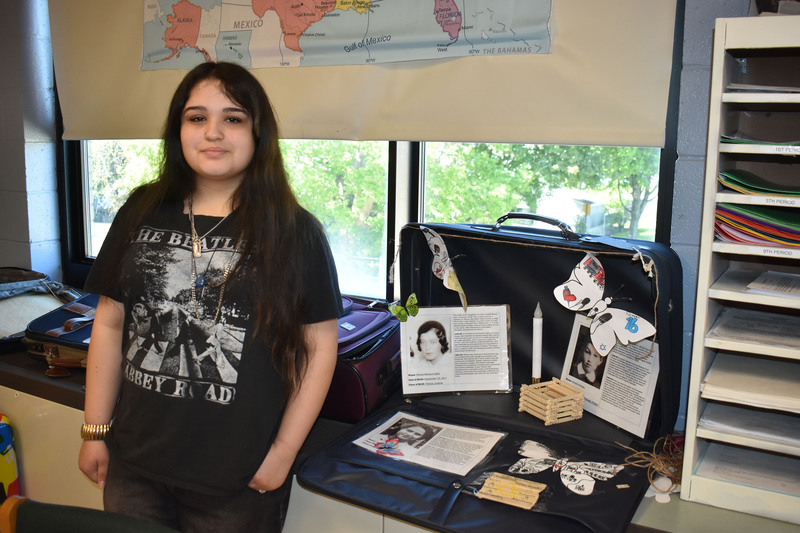
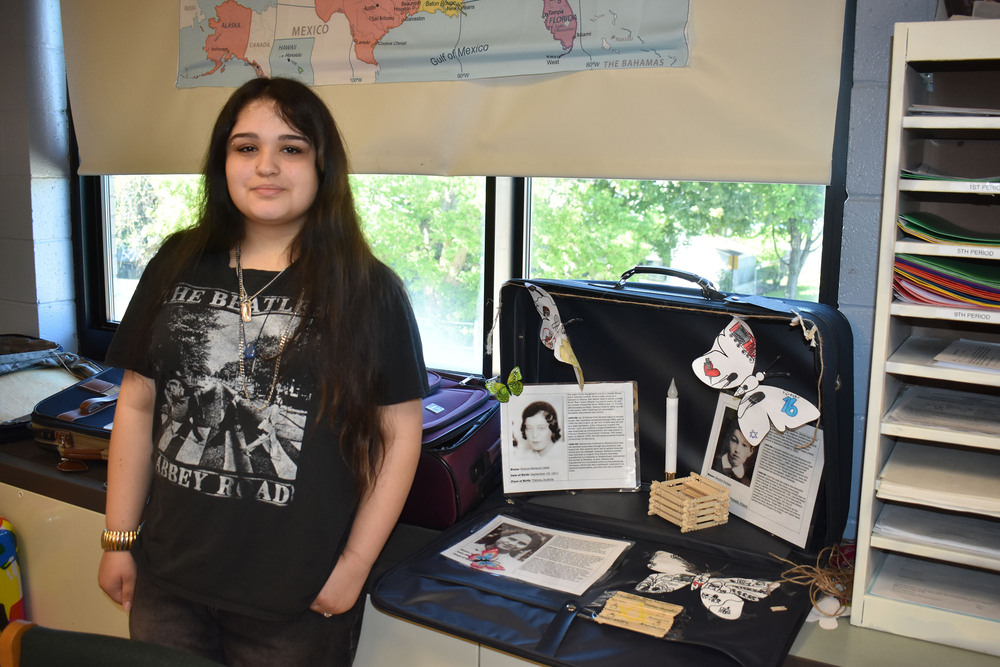
Herkimer-Fulton-Hamilton-Otsego BOCES Pathways Academy student Alicia Lopez, from Herkimer Central School District, poses with her suitcase project for a Holocaust unit students worked on. View additional photos on the Herkimer BOCES Facebook page at www.facebook.com/herkimerboces.
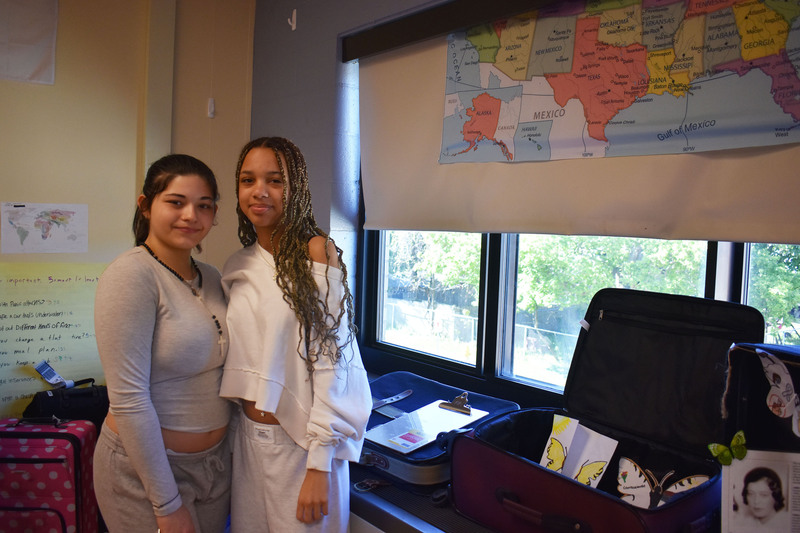
Herkimer-Fulton-Hamilton-Otsego BOCES Pathways Academy students Jisela Velazquez (left), from Central Valley Central School District, and Anaya Thompson (right), from Frankfort-Schuyler Central School District, pose by projects students created as part of a Holocaust unit.
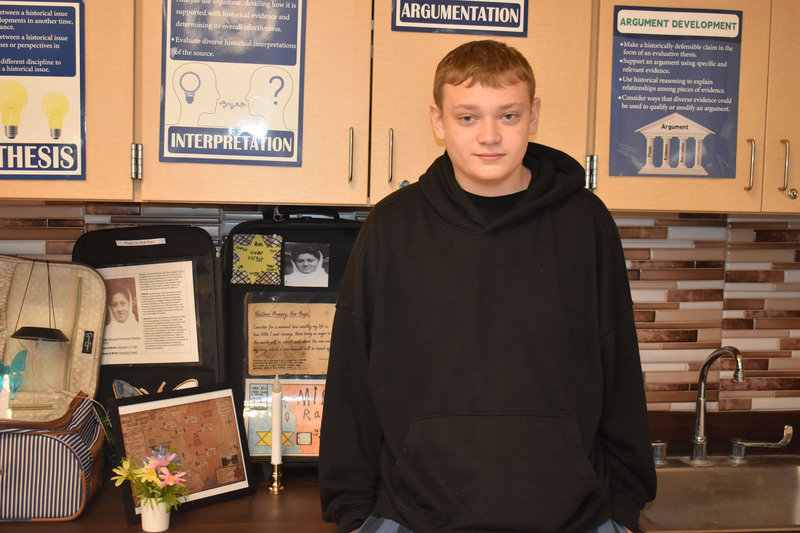
Herkimer-Fulton-Hamilton-Otsego BOCES Pathways Academy student Nick Krick, from Frankfort-Schuyler Central School District, poses with his suitcase project for a Holocaust unit students worked on.
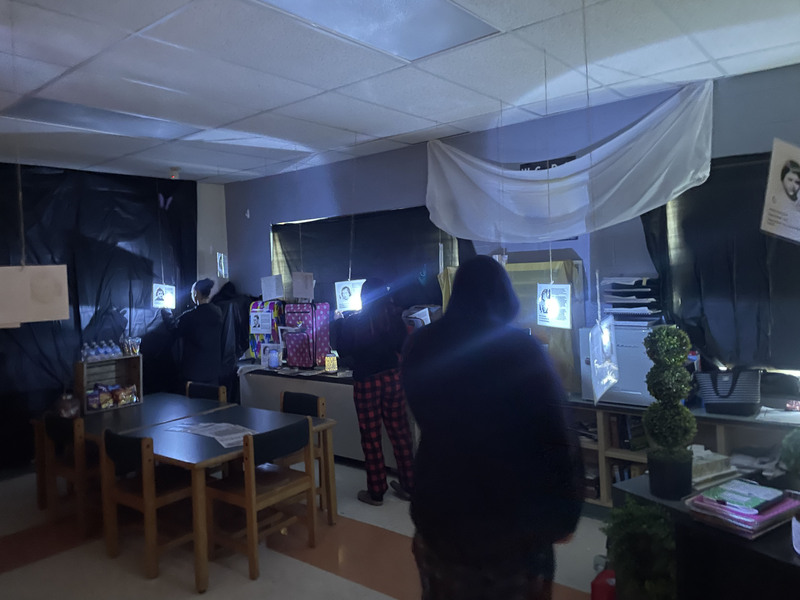
Students use flashlights to navigate through a Holocaust museum set up in a classroom as part of a social studies unit and related project.
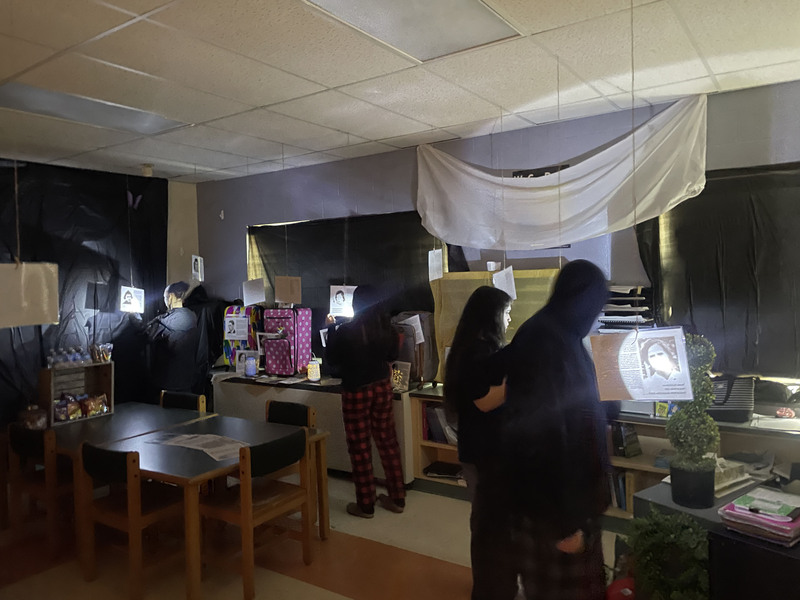
Students use flashlights to navigate through a Holocaust museum set up in a classroom as part of a social studies unit and related project.
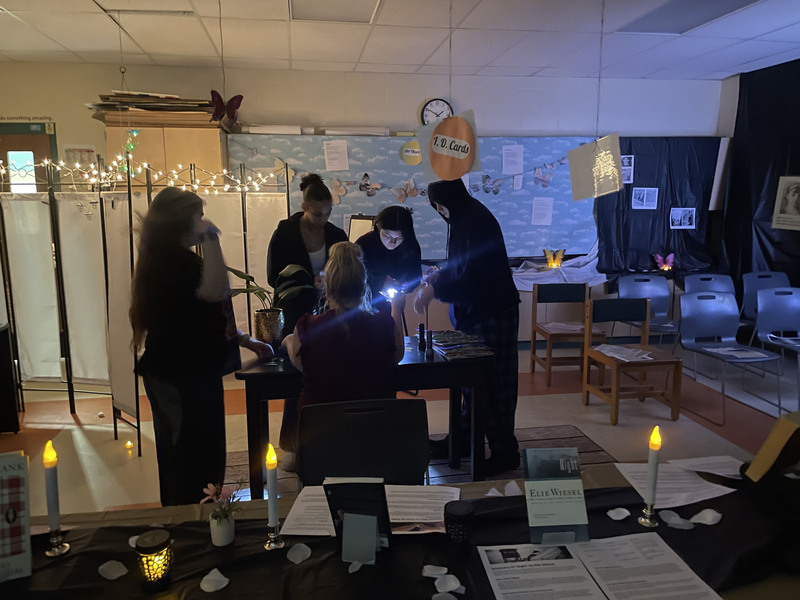
Students use flashlights to navigate through a Holocaust museum set up in a classroom as part of a social studies unit and related project.
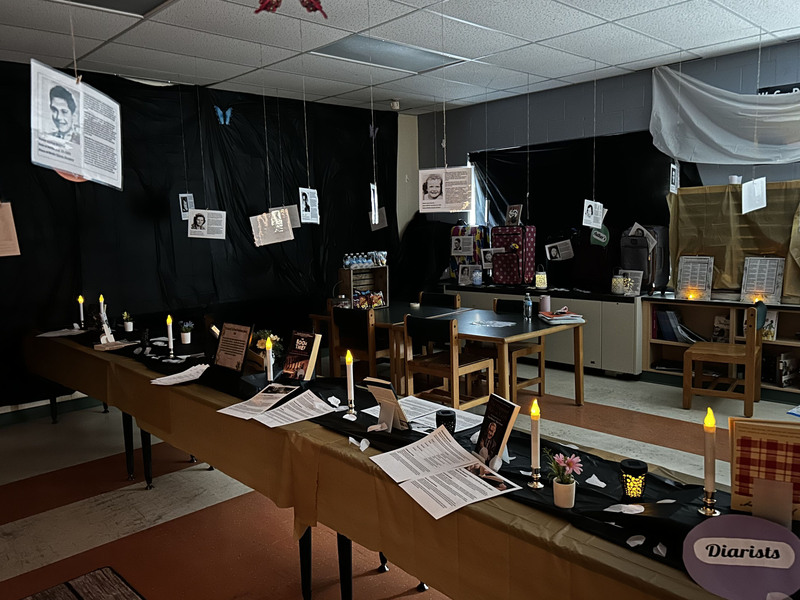
A Holocaust museum was set up in a classroom at the Herkimer-Fulton-Hamilton-Otsego BOCES Pathways Academy as part of a social studies unit and related project.
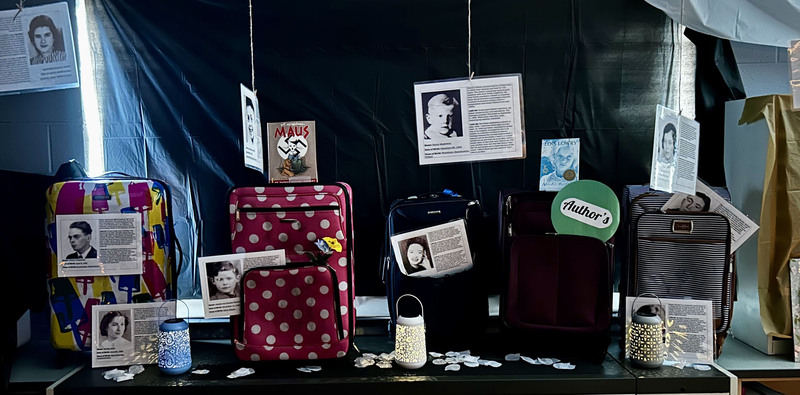
Herkimer-Fulton-Hamilton-Otsego BOCES Pathways Academy students’ suitcase projects as part of a Holocaust unit are pictured on display here in a classroom.
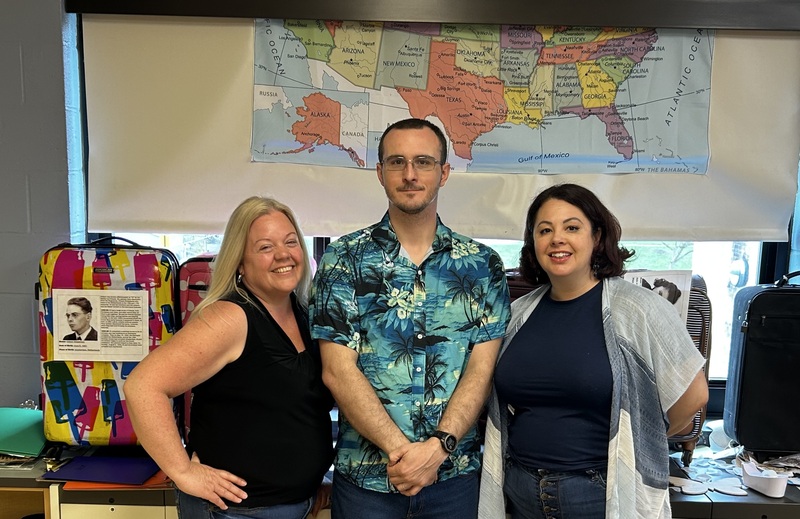
From left: Herkimer-Fulton-Hamilton-Otsego BOCES Pathways Academy teaching assistant Nycol Conigliaro, Pathways Academy social studies teacher Isaac Hafelin and Herkimer BOCES instructional coach Corrie Clements pose together in a classroom. The three educators teamed up to create a Holocaust museum and related project for students in Hafelin’s 10th grade social studies class.